

가렛 아델스타인은 상대가 블러프를 못 할 거라 확신했다. 하지만 틀렸다.
📄 한국어 번역
개럿 아델슈타인은 상대가 블러프를 할 리 없다고 확신했다. 하지만 그는 틀렸다.
필자: 던컨 스미스 · 온라인 캐시게임 프로
개럿 아델슈타인은 2018년 3월 자신의 커리어에서 가장 중대한 핸드 중 하나를 플레이했을 당시, 이미 <Live at the Bike>에서 가장 큰 승을 거두는 플레이어 중 한 명이 되어 있었다.
게임은 200달러 앤티가 있는 100/200달러 스몰 블라인드 구조였고, 개럿과 단골 상대인 아트 파파지안은 대략 700bb 깊이의 스택을 가지고 있었다. 그 뒤로 이어진 것은 헤즈업 4벳 팟, 거대한 리버의 결정, 그리고 파파지안이 절대 할 수 없을 것이라고 개럿이 확신했던 블러프였다.
그는 틀렸다.
몇 년이 지난 지금, 개럿은 이 핸드를 전환점으로 바라본다. 이 핸드는 딥스택 포커에 대한 그의 이해도에 구멍이 있음을 드러냈을 뿐만 아니라, 더 넓은 의미에서의 위험성, 즉 상대에 대한 자신의 모델을 지나치게 신뢰하게 되는 위험성을 보여주었다.
“내 커리어의 궤적에 있어서 이 핸드만큼 큰 역할을 한 단 하나의 핸드는 없다고 생각합니다.”
딥스택은 프리플랍 규칙을 바꾼다
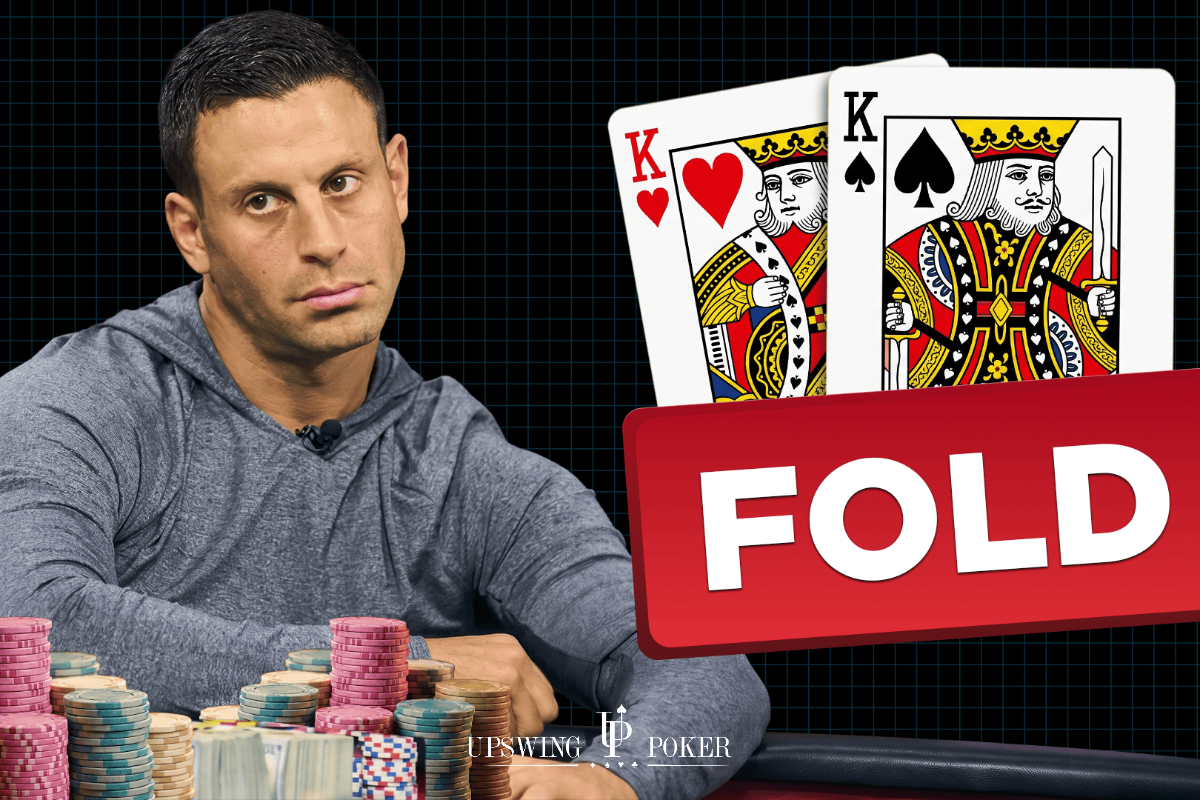
개럿은 컷오프에서 Kh Ks로 600달러 레이즈를 하고, 파파지안은 스몰 블라인드에서 Ac Kd로 3천 달러 3벳을 날린다. 개럿은 9천 달러로 4벳을 하며 응수하고, 파파지안은 콜을 한다.
일반적인 스택 깊이에서 플레이어들은 비교적 작은 4벳 사이즈에 익숙하다. 개럿은 수백 빅블라인드가 남아 있는 상황에서는 그러한 관행들의 매력도가 떨어진다고 주장한다.
파파지안의 5배 3벳은 특히 이 스택 깊이에서 합리적인 사이즈이며, 개럿의 3배 4벳도 같은 논리를 따른다. 100bb나 150bb 깊이에서는 더 작은 4벳이 합리적일 수 있다. 하지만 스택이 700bb에 육박하는 상황에서 개럿은 플랍이 열리기 전에 더 많은 돈이 팟에 들어가기를 원한다.
더 흥미로운 교훈은 그 다음에 일어나는 일, 혹은 파파지안의 경우처럼 거의 절대 일어나지 않는 일과 관련이 있다.
개럿은 파파지안에게 5벳 레인지가 근본적으로 부족하다고 믿었다. 이것이 100~150bb 같은 얕은 깊이에서는 그리 치명적이지 않을 수 있지만, 앞서 말했듯 700bb는 완전히 다른 이야기다.
이는 엄청난 전략적 결과를 낳는다. 개럿은 엄청난 5벳 블러프에 밀려 자신의 에퀴티를 포기해야 할 걱정 없이 QQ이나 심지어 JJ 같은 핸드로도 4벳을 할 수 있다. 레인지의 다른 쪽에서도 마찬가지다. K8 수딧 같은 핸드로 4벳을 날려 파파지안이 폴드하면 팟을 기분 좋게 가져올 수 있고, 콜을 받더라도 합리적인 에퀴티를 가지고 플랍에 도달할 수 있다.
신뢰할 수 있는 5벳 전략의 부재는 개럿이 양방향으로 레인지를 넓힐 수 있게 해준다.
“내 상대들 중 다수는, 특히 이 상황에서의 아트는 5벳 레인지를 가지고 있지 않았습니다.”
AA로만 구성된 5벳 레인지는 실제로 기능하지 않는다. 상대방이 또 다른 레이즈는 언제나 넛츠를 의미한다는 것을 안다면, 그는 그에 맞춰 대응할 수 있다. 극단적인 스택 깊이에서 플레이어들은 공격적인 상대가 또 다른 레이즈의 두려움 없이 4벳을 남발하는 것을 막기 위해 충분한 밸류와 블러프를 가져야 한다고 개럿은 주장한다.
2026년 9월 공개 예정: Destroy Live Cash
역사상 가장 두려운 라이브 캐시 플레이어 중 한 명이 거대한 팟을 어떻게 공략하는지 알아보세요. 실제 핸드, 실제 리드, 실제 익스플로잇. 대기자 명단 등록하기 →
응축된 레인지는 정밀함을 요구한다
Qc Ts Qh 플랍은 첵-첵으로 넘어간다. 개럿은 프리플랍 Aggressor임에도 불구하고 파파지안의 레인지를 이 보드와 더 잘 어우러진다고 설명한다.
파파지안이 아웃 오브 포지션에서 4벳 콜을 했기 때문에, 개럿이 초기 3벳에 그런 핸드들 중 일부로 콜을 했을 수 있는 반면, 파파지안은 AQ 수딧이나 TT 같은 핸드들을 높은 빈도로 유지할 수 있다.
개럿 또한 자신의 플랍 첵 레인지를 보호해야 한다. AA, KK, AK이 항상 벳을 할 수는 없으며, 일부 강한 핸드와 블러프도 동일한 라인을 통해 나중 스트리트로 향해야 한다.
파파지안이 8h턴에서 다시 첵을 하자, 개럿은 Kh Ks로 팟의 3분의 1 크기로 벳을 한다. 파파지안은 콜을 한다.
8d 리버는 보드에 투페어가 완성되며 거의 완벽한 블랭크에 가깝다. 파파지안이 다시 첵을 하고, 개럿은 팟의 대략 70%를 벳한다.
이 시점에서 양측 레인지의 좁아진 폭 때문에 사소한 디테일이 엄청나게 중요해진다. 개럿은 AA와 KK가 더 이상 사실상 같은 핸드가 아니라고 지적한다. AA를 들고 있으면 파파지안이 AA를 가질 경우의 수를 차단(블록)하지만, KK를 들고 있는 것은 그렇지 않다.
개럿에게는 블러프도 필요하다.
만약 그의 플랍 첵이 언제나 오버페어 또는 AK을 의미하고 에어나 슬로우플레이된 몬스터 핸드를 절대 포함하지 않는다면, 파파지안의 리버 결정은 너무나 쉬워질 것이다. 따라서 개럿에게는 턴과 리버에 벳하기 전에 플랍에서 첵할 수 있는 프리플랍 4벳 블러프가 일부 필요하다.
“만약 플랍에서 첵을 했는데, 그게 기본적으로 에어도 절대 없고 몬스터 핸드도 절대 없다는 것을 의미한다면… 당신은 포커를 잘 치고 있는 것이 아닙니다.”
상대는 정말로 블러프를 가지고 있는가?
파파지안은 개럿의 리버 벳에 맞서 5만 1천 달러로 체크레이즈를 날리며 응수한다.
이론적으로 개럿은 파파지안이 리버 체크레이즈 블러프용으로 쓸 수 있는 핸드들을 파악할 수 있다. JT과 T9 수딧은 개럿의 가장 강한 밸류 컴비네이션 중 일부를 블록할 수 있기 때문에 두 가지 가능성이 되는 핸드들이다.
하지만 솔버에서 블러프 하나를 찾아내는 것만으로는 충분하지 않다.
“그 블러프를 타당하게 만드는 가정들이 우리의 실제 인간 상대를 상대로 맞아떨어지지 않는다면, 우리는 당연히 그것을 내다 버려야 합니다.”
이것이 바로 진정한 상대 모델링의 문제다.
누군가가 “블러프를 할 능력이 있는지” 묻는 것만으로는 충분하지 않다. 그의 레인지가 충분한 블러프 후보군을 안고 정확히 이 노드에 도달할 수 있는지, 그리고 그의 이전 행동들이 그러한 핸드들의 존재를 허용하는지 판단해야 한다.
개럿은 파파지안이 그런 핸드들을 찾아낼 가능성이 낮다고 믿었다.
그는 파파지안과 몇 달 동안 정기적으로 플레이해왔고, 그가 이런 종류의 어마어마한 리버 플레이를 하는 것을 거의 본 적이 없었다. 파파지안은 평소보다 훨씬 큰 스택으로 플레이하고 있기도 했다. 리버 체크레이즈로 팟에 250bb 이상을 집어넣는 것은 엄청난 커밋먼트를 의미하며, 개럿은 상대가 패를 쥐고 있지 않고서는 그런 행동을 할 것이라 기대하지 않았다.
문제는 팟 오즈였다.
개럿은 3.4대 1보다 좋은 오즈를 받고 있었고, 성공 확률이 약 23%일 때만 콜이 정당화됐다. 따라서 폴드를 하려면 파파지안의 레일지가 압도적으로 밸류일 것이라는 엄청난 확신이 필요했다.
개럿은 결국 폴드했고, 파파지안은 로스앤젤레스 라이브 포커의 최종 보스를 상대로 전설적인 블러프를 성공시켰다.
당신의 모델이 틀렸을 때 일어나는 일
개럿의 좌절감은 원래 방송 중에도 명백히 드러났다. 그는 결정을 내리는 내내 불평을 늘어놓으며 파파지안이 “퀸을 19개” 가지고 있을 것이라고 말했다.
돌이켜봤을 때, 개럿은 자신의 그때 그 태도를 마음에 들어 하지 않는다.
📰 Original (English)
Skip to content
Garrett Adelstein Was Sure His Opponent Couldn’t Bluff. He Was Wrong.
By Duncan Smith · Online Cash Game Pro
Garrett Adelstein had already become one of the biggest winners on Live at the Bike when he played one of the most consequential hands of his career in March 2018.
The game was $100/$200 with a $200 ante, and Garrett and regular opponent Art Papazyan were roughly 700bb deep. What followed was a heads-up 4-bet pot, a massive river decision, and a bluff Garrett was convinced Papazyan simply was not capable of making.
He was wrong.
Years later, Garrett views the hand as a turning point. It exposed holes in his understanding of deep-stack poker, but also something broader: the danger of becoming too confident in your model of an opponent.
“No single hand, I think, played a bigger role in the trajectory of my career.”
Deep Stacks Change the Preflop Rules
Garrett opens to $600 from the Cutoff with Kh Ks and Papazyan 3-bets from the Small Blind to $3,000 with Ac Kd . Garrett responds by 4-betting to $9,000, and Papazyan calls.
At ordinary stack depths, players are accustomed to relatively small 4-bet sizes. Garrett argues that those conventions become less attractive when hundreds of big blinds remain behind.
Papazyan’s 5x 3-bet is reasonably sized, especially at this stack depth, while Garrett’s 3x 4-bet follows the same logic. A smaller 4-bet might be reasonable 100 or 150bb deep. With stacks approaching 700bb, Garrett wants more money going in before the flop.
The more interesting lesson involves what happens next—or, in Papazyan’s case, what almost never happens.
Garrett believed Papazyan essentially lacked a 5-betting range. This may not be critical at shallower depths e.g. 100-150bb, but again, 700bb is a whole different story.
That has major strategic consequences. Garrett can 4-bet hands such as QQ or even JJ without worrying about being pushed off his equity by a huge 5-bet bluff. The same is true at the other end of the range. A hand such as K8 suited can 4-bet, happily take down the pot when Papazyan folds, and still reach the flop with reasonable equity when called.
The absence of a credible 5-bet strategy lets Garrett expand in both directions.
“Many of my opponents, especially Art in this situation, did not have 5 bet ranges.”
A 5-bet range consisting only of AA is not really functional. If your opponent knows another raise always means the nuts, he can react accordingly. At extreme stack depths, Garrett argues that players need enough value and bluffs to prevent aggressive opponents from 4-betting without fear of another raise.
Coming september 2026 Destroy
Live Cash Learn how one of the most feared live cash players ever attacks massive pots. Real hands, real reads, real exploits. Join the Waitlist →
Condensed Ranges Require Precision
The Qc Ts Qh flop checks through, with Garrett explaining that Papazyan’s range actually interacts better with the board despite Garrett being the preflop aggressor.
Because Papazyan called the 4-bet out of position, he can retain hands such as AQ suited and TT at high frequency, while Garrett may have called the initial 3-bet with some of those holdings.
Garrett also needs to protect his flop checking range. AA, KK and AK cannot always bet; some strong hands and bluffs must arrive at later streets through the same line.
After Papazyan checks again on the 8h turn, Garrett bets one-third pot with his Kh Ks . Papazyan calls.
The 8d river is close to a complete brick, double-pairing the board. Papazyan checks again, and Garrett bets roughly 70% of the pot.
At this point, the narrowness of both ranges makes small details matter enormously. Garrett notes that AA and KK are no longer effectively the same hand. Holding AA blocks Papazyan from having AA; holding KK does not.
Garrett also needs bluffs.
If his flop check always means he has an overpair or AK and never contains air or a slow-played monster, Papazyan’s river decisions become far too easy. Garrett therefore needs some preflop 4-bet bluffs that can check the flop before betting the turn and river.
“If you check the flop, if that always means basically you never have air and you never have a monster hand… you are not playing good poker.”
Does Your Opponent Actually Have the Bluff?
Papazyan responds to Garrett’s river bet by check-raising to $51,000.
In theory, Garrett can identify hands that could serve as river check-raise bluffs for Papazyan. JT and T9 suited are two possibilities because they can block some of Garrett’s strongest value combinations.
But simply finding a bluff in a solver is not enough.
“If the assumptions that make that bluff good are not true against our human opponent, then of course we need to throw it out the window.”
That is the real opponent-modeling problem.
It is not enough to ask whether someone is “capable of bluffing.” You need to determine whether his range can arrive at this exact node with enough bluff candidates, and whether his earlier actions allow those hands to exist at all.
Garrett believed Papazyan was unlikely to find them.
He had played with him regularly for months and had rarely seen him make an enormous river play of this kind. Papazyan was also playing significantly bigger than usual. Putting more than 250bb into the pot with a river check-raise represented a major commitment, and not one Garrett expected his opponent to do without the goods.
The problem was the price.
Garrett was getting better than 3.4-to-1 and needed to be right only around 23% of the time. Folding therefore required tremendous confidence that Papazyan’s range was overwhelmingly value.
Garrett eventually folded, and Papazyan pulled off a legendary bluff against Los Angeles live poker’s end boss.
What Happens When Your Model Is Wrong?
Garrett’s frustration was obvious during the original broadcast. He complained throughout the decision and remarked that Papazyan must have “19 queens.”
Looking back, Garrett dislikes the attitude that his reaction revealed considerably more than he dislikes the fold itself.
The bigger problem was how certain he had been.
He had constructed a model of Papazyan in which this river bluff essentially did not exist. Papazyan was capable of making a play Garrett had effectively removed from his model, which meant the model itself needed to change.
“Being convinced Art had 19 queens wasn’t just a bad look. It also cost me a ton of EV.”
The hand ultimately became valuable because Garrett did not leave the experience there.
Papazyan and another regular Live at the Bike opponent, Dan Zack, had been getting the better of him in enough difficult spots that Garrett began questioning what was missing from his game. This hand, more than any other, convinced him that the answer required much more work.
Garrett dove into PIO and eventually spent thousands of hours studying solver outputs. He was already winning big on stream and off it, but winning was no longer sufficient evidence that his understanding was complete.
There is an additional irony. When Garrett finally ran this particular hand through a solver years later, Papazyan’s Ac Kd check-raise was not especially GTO-approved.
This just strengthens the lesson.
Garrett did not need Papazyan’s specific play to be theoretically perfect. He needed the hand to demonstrate that something he believed with enormous confidence was false. Papazyan was capable of making a play Garrett had effectively removed from his model, rendering his model obsolete and in desperate need of an update.
The response was not to dismiss Papazyan’s bluff because a later simulation disliked it. It was to reconsider the assumptions underneath his game.
Improvement does not only mean accumulating new strategies. Sometimes it means discovering that a belief underneath years of successful poker was wrong, then being willing to tear into your game until you understand why.
Garrett was already winning.
After this hand, that was no longer enough.
“But I
출처: upswing — https://upswingpoker.com/garrett-adelstein-kk-vs-art-ak-bluff-live-at-the-bike-breakdown/
원문 게시일: 2026-08-07