
ICM vs 칩 리더: 딜런 와이즈먼이 알려주는 고난도 PLO 파이널 테이블 공략법
📄 한국어 번역
ICM vs 칩 리더: 딜런 와이즈먼(Dylan Weisman)이 PLO 파이널 테이블의 까다로운 상황을 헤쳐 나가는 법
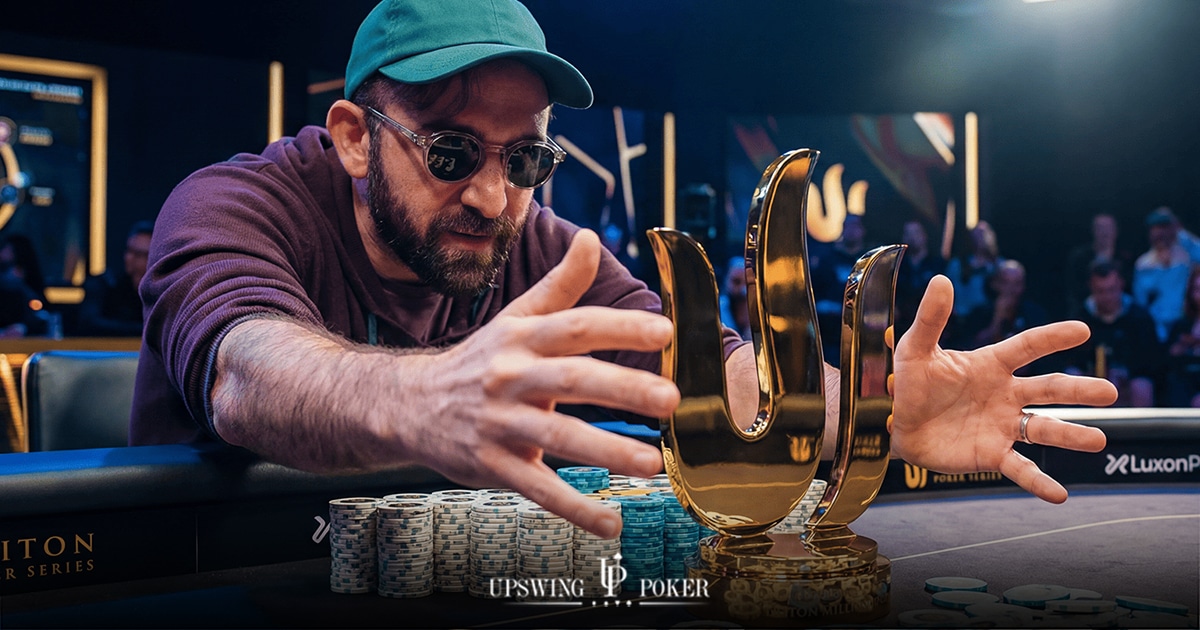
업스윙(Upswing)의 곧 출시될 'Crushing PLO Tournaments' 코스에서, 딜런 와이즈먼이 WSOP Paradise에서 열린 75,000달러 트리톤(Triton) PLO 파이널 테이블의 한 핸드를 분석합니다.
다음 영상은 그의 "Plan Explained(전략 설명)" 섹션에서 발췌한 것으로, 하이 스테이크 PLO 토너먼트에서 ICM 압박, 스택 역학, 그리고 프리플랍 결정이 어떻게 작용하는지를 보여주는 훌륭한 예시입니다.
자세히 살펴보겠습니다.
PLO 토너먼트 성적을 향상시키고 싶다면, 딜런의 곧 출시될 'Crushing PLO Tournaments' 코스에서 이 개념들을 훨씬 깊이 있게 다룹니다. 지금 사전 등록을 하면 4월 20일 업스윙에 코스가 공개될 때 바로 학습을 시작할 수 있습니다.
스택 분포가 프리플랍 결정에 미치는 영향
딜런은 이 핸드에서 가장 중요한 요소인 '스택 분포'를 설명하며 시작합니다.
그는 버튼에서 약 36bb를 보유하고 있으며, 이는 여러 중간 스택 중 하나입니다. 확실한 칩 리더가 있고, 10bb, 13bb, 20bb의 짧은 스택 세 명이 남아 있습니다.
딜런의 말입니다.
"저처럼 중간 스택일 때는, 나를 탈락시킬 수 있는 사람들을 상대로 핸드를 플레이하지 않는 것이 유리합니다."
이것이 토너먼트 포커, 특히 핸드 간의 에퀴티 차이가 크지 않고 탈락 위험이 항상 높은 PLO에서 ICM이 가하는 압박입니다. 당신의 목표는 살아남아서 다른 사람들이 먼저 탈락하게 만드는 것입니다.
그렇다고 해서 최고의 핸드만 기다려야 한다는 뜻은 아닙니다. 여전히 공격적으로 팟을 가져올 수 있지만, 공격성과 보수적인 ICM 플레이 사이의 균형을 맞추는 것이 토너먼트 우승의 핵심입니다.
프리플랍 전략과 결정
핸드는 칩 리더인 마티아스 아이빙거(Matthias Eibinger)가 7542 더블 수티드 핸드로 2.5배 레이즈를 하며 시작됩니다. 딜런은 버튼에서 클로버 3장과 스페이드 1장이 섞인 KKT9를 들고 있습니다.
당시 아이빙거는 훌륭한(어쩌면 PLO 입문 단계인) PLO 플레이어였지만, 노 리밋 홀덤 프로로서는 매우 뛰어난 실력자였습니다.
이 핸드만 놓고 보면 콜을 하는 것이 당연해 보입니다. 하지만 파이널 테이블, 특히 중간 스택일 때는 자동적인 결정이란 없습니다.
첫 번째 핵심 조정은 사이징에서 나옵니다.
딜런은 놀라운 점을 지적합니다.
"칩 리더일 때는 사실 2.5배 오픈 사이징을 자주 사용하고 싶지 않을 겁니다... 보통은 3배나 3.5배로 키우고 싶어 하죠."
더 중요한 점은, 작은 사이징이 버튼의 대응을 바꾼다는 것입니다. 즉, 오픈이 작으면 콜이 많아지고 3-벳이 줄어들며, 오픈이 크면 3-벳이 늘어나고 콜이 줄어듭니다.
이것이 반복되는 주제 중 하나입니다. 두 번째 요소는 레인지입니다.
아이빙거가 칩 리더이기 때문에 그는 매우 넓은 레인지로 오픈할 수 있습니다. 특히 포스트플랍에서 공격적으로 방어할 수 없는 중간 스택들을 상대로는 더욱 그렇습니다. 그들은 짧은 스택들의 존재 때문에 손발이 묶여 있기 때문입니다.
세 번째 요소는 딜런이 에이스를 가지고 있지 않다는 점입니다.
그는 이렇게 설명합니다.
"핸드에 에이스가 없다는 사실은 우리가 공격성을 낮추는 쪽으로 기울게 만듭니다."
파이널 테이블에서 칩 리더가 4-벳을 하면, 이는 에이스가 포함된 핸드나 에이스와 강한 수티드 조합에 크게 치중되어 있습니다. 에이스가 없는 상태에서 나를 탈락시킬 수 있는 상대를 상대로 계속 플레이하는 것은 매우 불리한 위치입니다.
4-벳에 폴드할 것을 전제로 3-벳을 할 수도 있지만, 지금 같은 핸드로는 그 매력이 훨씬 떨어집니다.
PLO MTT에서 ICM이 전략에 미치는 영향
여기에는 더 넓고 유용한 개념이 있습니다. 딜런은 ICM 환경에 대해 직관에 반하는 점을 강조합니다.
"더 작은 사이징을 사용한다면, 사실 더 낮은 빈도로 오픈해야 합니다."
대부분의 플레이어는 오픈이 작을수록 더 넓게 오픈할 수 있다고 자연스럽게 가정합니다. 하지만 실제로는 더 큰 사이징이 더 많은 압박을 가하고 더 많은 폴드를 유도합니다.
실전적인 관점에서 그는 솔버의 의견에 동의합니다. 파이널 테이블에서는 플레이어들이 더 큰 오픈에 더 많이 폴드하기 때문에 3배~3.5배 오픈이 더 효과적입니다.
딜런의 이 핸드에 대한 결론은 명확합니다.
팟 사이즈 오픈을 마주했을 때, KKT9는 일부 ICM 상황에서는 폴드할 수도 있습니다.
하지만 2.5배 오픈을 상대로는 콜이 됩니다.
큰 실수
그때 핸드에 반전이 일어납니다. 가장 짧은 스택인 딩 비아오(Ding Biao)가 스몰 블라인드에서 JJT3 트리 수티드로 오버콜을 합니다. 딜런은 딩의 결정을 가감 없이 비판합니다.
"솔직히 말해서, 저건 정말 큰 실수(punt)입니다."
ICM 관점에서 이는 중대한 오류입니다.
10bb 상황에서는 핸드가 단순하고 에퀴티가 높아야 합니다. JJTT, JJ88 같은 페어 구조나 3-벳을 할 수 있는 강한 더블 수티드 핸드를 생각해야 합니다. 딩의 JJT3는 스퀴즈를 하기에도 좋은 핸드였습니다.
대신 이 핸드는 포스트플랍에서 어색한 상황을 만들고, 두 레인지 모두를 상대로 좋지 않은 성적을 냅니다.
딜런은 핸드 간의 상호작용에 대해서도 지적합니다.
7653처럼 낮고 연결된 핸드들은 버튼의 하이 카드 위주 레인지와 겹치지 않기 때문에 오히려 여기서 더 나은 성능을 보입니다. JJT3는 그 반대입니다. 버튼의 레인지와 어색하게 정면충돌하게 됩니다.
어떤 플랍 역학이 작용하는가?
As Qs 6h 플랍에서 딜런은 거샷을 포함한 세컨드 페어를 가졌고, 그의 킹 중 하나는 스페이드입니다. 아이빙거의 경우, 대부분의 플레이어는 칩 리더가 하이 카드 보드에서 당연히 씨벳을 한다고 생각합니다.
딜런은 이에 반박합니다.
"많은 칩 리더가 파이널 테이블에서 저지르는 큰 실수는 이런 하이 카드 보드에서 씨벳을 너무 많이 한다는 것입니다."
ICM 상황에서 버튼의 플랫 콜 레인지는 사실 매우 강하며 하이 카드 위주로 응축되어 있습니다.
즉, AQx 같은 보드는 사람들이 생각하는 것만큼 칩 리더에게 유리하지 않습니다.
결과적으로, 체크가 지배적인 전략이 됩니다.
딜런은 어떻게 플랍 결정을 내리는가?
액션이 버튼인 딜런에게 체크로 넘어왔고, 이제 결정은 에퀴티와 리무벌(제거 효과)에 관한 것이 됩니다.
그는 이 두 가지 질문으로 상황을 정리합니다.
내 핸드의 에퀴티는 얼마나 되는가?
상대방 레인지의 에퀴티를 얼마나 제거하는가?
그의 핸드는 어느 정도 에퀴티가 있지만 리무벌은 거의 없으며, ICM 상황에서는 이것이 매우 중요합니다.
"가장 취약한 스택 중 하나로서 베팅을 한다면... 상대방이 계속 플레이할 확률을 정말로 낮춰야 합니다."
그는 또한
📰 Original (English)
Skip to content
Now Powered By
Play Online
Now Powered By
Play Online
ICM vs Chip Leader: How Dylan Weisman Navigates a Tough PLO Final Table Spot
In this preview from his upcoming Crushing PLO Tournaments course on Upswing, Dylan Weisman walks through a hand from a $75,000 Triton PLO final table at WSOP Paradise.
The following video comes from his “Plan Explained” section, and it’s a great example of how ICM pressure , stack dynamics, and preflop decisions all play a role in high-stakes PLO tournaments.
Let’s break it down.
If you’re serious about improving your PLO tournament results, Dylan’s upcoming Crushing PLO Tournaments course goes much deeper into these concepts. You can pre-register now and be ready when it drops on Upswing on April 20th.
How Stack Distribution Impacts Preflop Decisions
Dylan starts by framing the most important element of the hand: stack distribution.
He’s sitting on the Button with about 36bb, one of several middling stacks. There’s a clear chip leader, plus three shorter stacks at 10bb, 13bb, and 20bb.
As Dylan says:
“ When you’re the middling stack, such as myself, your incentive is not to play hands against one of the people who can bust you. ”
This is the force that ICM applies to tournament poker, especially in PLO where equities between hands run so close together and your risk of busting is always so high. Your goal is to survive, and let others bust before you.
That doesn’t mean you’re supposed to wait around for only the best hands. You can still get aggressive and fight for pots, but balancing this dynamic of aggression versus conservative ICM play is critical to winning tournaments.
Preflop Strategy and Decisions
The hand begins with the chip leader, Matthias Eibinger, opening to 2.5x with 7542 double-suited. Dylan is on the Button holding KKT9 with three clubs and a spade.
At the time, Eibinger was a good (and possibly new) PLO player, but he’s an excellent No-Limit Hold’Em professional.
As for the hand, this looks like a clear continue. At a final table, however, especially as a middling stack, nothing is automatic.
The first key adjustment comes from the sizing.
Dylan points out something surprising:
“When you’re the chip leader, you actually don’t want to use a 2.5x opening sizing very much… You usually are going to want to size up to 3x or 3.5x.”
More importantly, the smaller sizing changes the Button’s response. This means smaller opens lead to more calls and fewer 3-bets, while larger opens push you toward more 3-bets and fewer calls.
That’s one recurring theme. The second factor is range.
Because Eibinger is the chip leader, he gets to open extremely wide, especially into middling stacks who can’t defend aggressively postflop. This is because they are handcuffed by the presence of the short stacks.
The third factor is that Dylan doesn’t have an ace.
He explains:
“The fact that we don’t have an ace in our hand really leans us towards taking less aggression.”
At a final table, when the chip leader 4-bets, it’s heavily weighted toward aces or hands containing an ace and strong suits. Without an ace yourself, you’re in a terrible position to continue against somebody who can bust you.
3-betting with the intention of folding to a 4-bet is possible, but it’s much less appealing with this exact holding.
How ICM Impacts Strategy in PLO MTTs
There is a broader, very useful concept here. Dylan highlights something counterintuitive about ICM environments:
“If you use a smaller sizing, you actually have to do so at a slightly lower frequency.”
Most players make the natural assumption that smaller opens mean you can open wider. In reality, larger sizings apply more pressure and generate more folds.
From a practical standpoint, he sides with the solver: 3x–3.5x opens perform better at final tables because players fold more versus larger opens.
For Dylan’s specific hand, the conclusion is clear.
Facing a pot-sized open, KKT9 can actually become a fold in some ICM scenarios.
But versus 2.5x, it becomes a call.
The Big Mistake
Then the hand takes a turn. Ding Biao, the shortest stack, overcalls in the Small Blind with JJT3 tri-suited. Dylan doesn’t sugarcoat Ding’s decision:
“I’m not going to lie, that’s a big old punt.”
From an ICM perspective, this is a major error.
At 10bb, your hands need to be simple and high equity. Think paired structures like JJTT, JJ88, or strong double-suited hands that can 3-bet. Ding’s JJT3 hand could easily squeeze as well.
Instead, this hand creates awkward postflop situations and performs poorly against both ranges.
Dylan also makes a point about hand interaction:
Low, connected hands like 7653 actually perform better here because they don’t overlap with the Button’s high-card-heavy range. JJT3 does the opposite, it awkwardly runs right into it.
What Flop Dynamics Are In Play?
On this As Qs 6h flop, Dylan holds second pair with a gutshot, and one of his kings is a spade. As for Eibinger, most players assume the chip leader has a clear c-bet on high-card boards.
Dylan pushes back on that:
“A big mistake that a lot of chip leaders make at final tables is they like to c-bet too much on these high card boards.”
In ICM, the Button’s flatting range is actually very strong and condensed around high cards.
That means boards like AQx don’t favor the chip leader nearly as much as people think.
As a result, checking becomes the dominant strategy.
How Dylan Makes His Flop Decision
Action checks to Dylan on the Button, and now the decision becomes about equity and removal.
He frames it with these two questions:
How much equity does my hand have?
How much equity do I remove from my opponent’s range?
His hand has some equity but very little removal, and in ICM spots that’s critical.
“If you’re betting as one of the more vulnerable stacks… you really need to reduce your opponent’s probability of continuing.”
He also notes that he would check back stronger hands here, like Kings with the nut flush draw, to avoid getting check-raised.
That’s the key consistency point: if you check strong hands, you need to check these as well.
So, naturally, he checks back. The turn comes 5d .
Eibinger barrels, and with no clear way forward, Dylan folds.
If you want a complete, structured approach to PLO tournaments (from preflop ranges to postflop execution) get Dylan Weisman’s Crushing PLO Tournaments course on Upswing that’s now released. It’s designed to take these ideas and turn them into a system you can actually apply at the table.
Now Available
Crushing PLO Tournaments is ready.
Your edge starts here.
Check out Crushing PLO Tournaments and see why high-stakes legends like Brian Rast and Erik Seidel trust Dylan’s approach. Lifetime access, PLO Trainer App access, and a launch-week bonus package if you act before the window closes.
Get Crushing PLO Tournaments →
Related Posts
How to Make Profitable Decisions Against Any Bet Size (Minimum Defense Frequency vs Pot Odds)
By Dan B. | August 3, 2018
Why The Very Best Poker Players Make Decisions At Random (Mixed Strategy)
By George Mathias | August 11, 2017
How to Beat the Guy Who Is Always Betting — Countering an Aggressive Poker Strategy
By Dan B. | July 24, 2018
This Poker “Cheat Code” Will Help You Win More Hands
By Mike Brady | February 8, 2019
Why 5♠ 4♠ is Better Than 9♠ 8♠ (And How That Should Impact Your Strategy)
By Dan B. | February 11, 2020
5 Advanced Poker Strategies & Tips To Supercharge Your Poker Wins
By Dan B. | June 2, 2020
What Is Equity Distribution & Why Does It Matter?
By Dan B. | February 23, 2021
What is the Poker Game Tree & Why Does It Matter?
By Dan B. | June 2, 2021
How to Make Profitable Decisions Against Any Bet Size (Minimum Defense Frequency vs Pot Odds)
By Dan B. | August 3, 2018
Why The Very Best Poker Players Make Decisions At Random (Mixed Strategy)
출처: upswing — https://upswingpoker.com/dylan-weisman-75k-plo-mtt/
원문 게시일: 2026-04-10